
Curriculum

GUMBUP
Traditional gumbup based on various techniques from the Mooyehdobotongji. Forms increase with difficulty from Ssangsoo Gumbup (double-handed gumbup), Pyeonsoo Gumbup (single-handed gumbup) to Sssang Gumbup (dual-wield gumbup). Training in all methods, pursues physical and mental health based on actual combat.

CUTTING
Cut various fixed and moving objects.Cutting actual targets is the only way to experience the mechanical principles of a sword that cannot be learned from gumbup and gyojeon.Cutting, gumbup and gyojeon training are the core of the World Kummooyeh Federation training system.

WOLDO
Woldo is a single-edged blade with a long handle. It is made for cutting rather than stabbing and is structured to use it's weight to store large amounts of kinetic energy for cutting.As sharp as it is, the woldo is also said to create massive damage due to the force and weight behind it during use..The hole in woldo where the decoration is attached is called Hwanhyeol.

ARCHERY
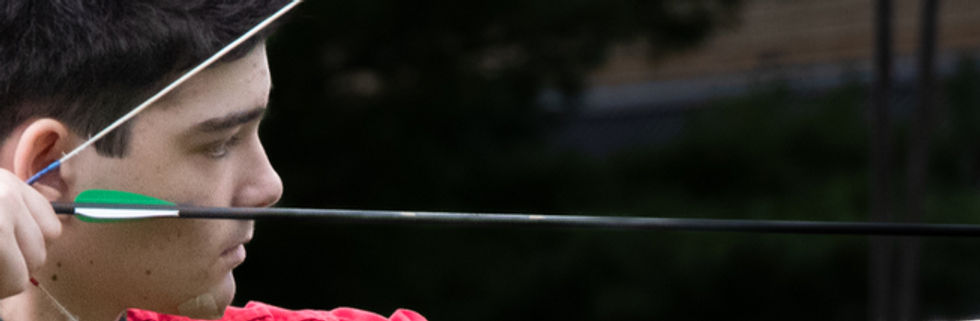
It is a weapon that is useful for long distances among traditional Korean martial art weapons. Korean bows are short, but have characteristics of fast flying speed and can cover long distances due to the strong flexibility and elasticity of Korean bows. This training helps develop concentration and focus.

SPARRING
Practical combat training is difficult to learn with only gumbup training and so respectful sparring is necessary.As one improves their sword technique one also learns respect for others. Only by practicing sparring techniques and sparring with others will one learn to act and react against another person's action.

MEDITATION
Proper breathing during basic and high level techniques is crucial for success. Danjeon breathing can improve mental concentration and physical strength health similar to yoga.
Breathing and meditation before training helps calm the body and mind to prepare it for training.
Natural breathing and meditation after intense training helps restore the mind and body to a stable state.
KUMMOOYEH - Korean Sword Martial Art
What is Kummooyeh?
Kummooyeh is a newer Korean sword discipline developed from researching the Muye Dobo Tongji, one of the oldest martial arts manuals from the east, to create a more authentic Korean sword style and technique. The historical manual helped produce a more balanced martial art by training in forms, sparring, cutting, meditation as well as other weapons system like the traditional Korean bow and the woldo. While many martial arts consists of physical and mental training in order to succeed, Kummooyeh allows for practice in a more modern and natural method that coincides with people's daily lives.
Now in the United States
The Korean standard has now expanded Kummooyeh instruction to the U.S., bringing the same fundamentals as taught oversees. While Kummooyeh schools have been in the U.S. before, their forms are borrowed from other Korean sword styles like Haidong Gumdo. Our version of Kummooyeh, Kummooyeh means sword martial arts, consists of all original forms and content based on the historical manual, the Muye Dobo Tongji, and is now ready to share with other countries of the world. Kummooyeh was originally developed by the founder, Grandmaster Bouk Soo Joung, who has also authored a book on the martial art in Korean. We intend to teach and keep the same high standard as taught in Korea for students, instructors and masters.
What you’ll do in class
-
Learn foundational grips, cuts, stances, and footwork
-
Practice solo and partner forms to build timing and distancing
-
Perform safe, supervised cutting drills to test accuracy and edge alignment
-
Develop situational awareness and etiquette rooted in Korean martial culture
Who it’s for
Adults and teens looking for a disciplined, technical sword practice enhanced with traditional Korean archery that is practical and easy on the body.
Purposes
-
Enterprising spirit - going forward on your own and achieving new things (active)
-
The spirit of the Hoyeonjigi - a wide and big heart that is fair and shameless (tolerance)
-
Spirit of patriotism - spirit to protect the country
-
Spirit of filial piety - the spirit of serving one's parents, which is the basics of etiquette
-
Spirit of self-denial - Overcoming weakness and developing courage
-
Advantages
-
It is a step-by-step training that does not deviate much from the principle of Kumdo and can keep interests and health in the modern age.
-
It is a family martial art that anyone can be easily trained in.
-
Meditation exercises that require a high degree of concentration promotes wellness.
-
It is the succession of a traditionally spiritual culture and heritage / spreading the spirit of our ancestors who know how to enjoy the progressive and great spirits.
-
Teach respect and manners. Respect and manners are the most fundamental behavior to others.
-
Develop healthy emotions and educate young people with respect and manners.
-
Self defense
Kummooyeh vs Haidong Gumdo
Korean sword martial arts has gone through a variety of naming conventions and spellings and has been referred to as Kendo, Kumdo, Gumdo, Geomsul, Debeop, among others. Prefixes (again with a variety of spellings) have been added such as Haedong, Haidong and Bonguk to differentiate stylistic differences. The word "sword," in Korean simply translates into "geom," being pronounced as gum or kum being that there is no direct translation for the starting sound that lies in between the "g" and "k" sound which is why it is seen using the "G" or "K".
Originally, China used the "Sul" suffix in martial arts like Geomsul or Changsul, Japan used "Do" as in Judo or Kendo and Korea used "Ye" as in Gungjung-muye and Kummooyeh. Many Korean martial arts have adopted the Japanese "Do" suffix without hesitation during the Japanese occupation of Korea and still sticks today.
Haidong Gumdo, which has had the privilege of being the main Korean sword martial art in the U.S. and the world, provides a popular gateway to battlefield tactics (one vs many) which is less historically practical and gives emphasis on structured stances and forms.
Kummooyeh is now gaining as a traditional alternative which is easier on the body, technically and historically more accurate and provides access to additional weapons systems.
QUICK COMPARE (to reduce name confusion)
Kummooyeh — Martial art pairing sword with traditional Korean archery; two active federation lines
-
World Kummooyeh Federation: Original Founder Iseong Bouk Soo Joung. Original forms and technique. worldkummooyeh.org
-
World Kummooyeh Federation: Grandmaster Hyun Kyoo Jang. Uses Haidong Gumdo forms and technique. kummooyeh.org
Haidong/Haedong Gumdo/Kumdo
-
Korea Haidong Kumdo (KHKA) — Korea-based federation
Current leadership lists representatives Jeong Bok-su (정복수) and Jeong Chang-yong (정창용). haidongkumdo.org
-
World Haidong Gumdo Federation (WHGF) — Large Haidong Gumdo umbrella with a unified syllabus.
Founder/President: Jeong-Ho Kim (김정호). ushaidong.org
-
United World Haedong Kumdo Federation (UWHKF) — Uses “Haedong Kumdo”; known for the Jinyoung Ssangkum Ryu two-sword track.
Founder/Head (Chong Jae Nim): Kim Jeong-Seong (김정성).
-
“Kumdo” (Kendo sport) — Armor/bamboo-sword competition akin to Japanese kendo; governed in Korea by the Korea Kumdo Association (KKA) rather than a single founder.
Founder
Bouk Soo Joung
Modern society, with all its technology and material comforts, has also brought problems like materialism and individualism. To combat this, practitioners of Kummooyeh focus on spiritual discipline and character education, following principles of loyalty, filial piety, propriety, and righteousness.
For a long time, Kummooyeh practitioners have worked to improve their skills, train new students, and promote national health. They aim to revitalize Kummooyeh—a traditional martial art and cultural heritage—by sharing its style and spirit. They also help foster international understanding and cooperation through global exchanges, which in turn boosts national prestige.
We are dedicated to preserving and spreading Kummooyeh. We actively prepare for the future by creating systematic kumdo programs and training the next generation of practitioners. We also research traditional martial arts and share our findings to help preserve our cultural heritage.
Although there are many kumdo organizations in Korea, our association focuses on character education, spiritual growth, and physical training for young people. We strive to make Kummooyeh a national martial art that embodies the spirit of the Korean people. We also aim to foster patriotism and contribute to the well-being of citizens through the continued research and promotion of this unique cultural heritage.

About
Master Il Nam Yang
NY Kummooyeh is headed by Master Il Nam Yang, as established by the World Kummooyeh Federation under founder, Grandmaster Ilseong Bouk Soo Joung. Master Yang is known for training his students with high quality, care and attention to detail while maintaining traditional values.
Master Yang has a lifetime of experience in Korean sword martial arts. His participation and mastery among numerous federations include Daehan Gumdo, Haedong Kumdo, Haidong Gumdo and now Kummooyeh among other notable martial arts. A true master who focuses on passing the knowledge of martial arts to his students.

Our Team
The Kummooyeh Team Welcomes You.

Julius Gonsalves - 3rd Dan
Head Instructor

Peter Fil - 2nd Dan
Senior Instructor

Jacob Yang - 1st Dan
Instructor

Gabriella Spain - 2nd Dan
Leadership Team

Dan Harrigan - 2nd Dan
Leadership Team

Yun Suk Jung - 1st Dan
Leadership Team
